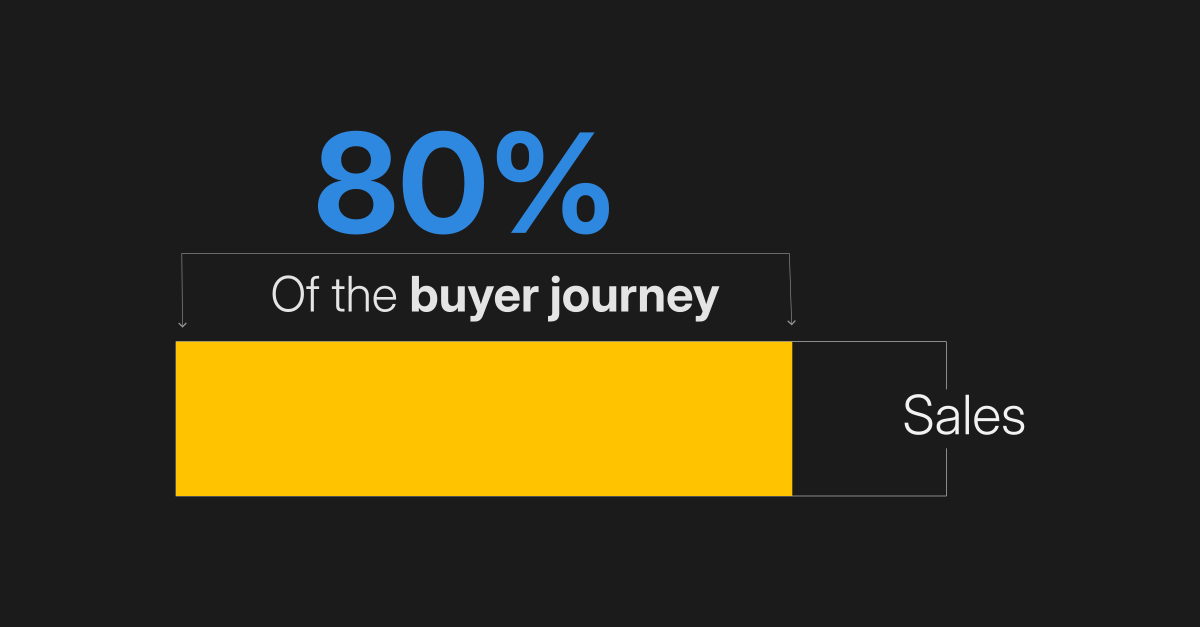
If you're reading this post, you've probably heard this statistic: 80% of the buyer journey happens before prospects engage with sales. In other words, the buyer journey has shifted left.
This goes back years now, and it's more true today than ever. Your prospects are doing research. They're comparing vendors. They're reading analyst reports, scrolling through Reddit threads, watching YouTube reviews, and asking their peers for recommendations. They're building internal consensus about your product and if it can solve their problems.
All of this happens out-of-band to sellers, and much of it is outside your control.
They're forming opinions about your product, your competitors, and whether or not you deserve consideration. By the time they raise their hand to talk to your sales team, they've already made significant progress toward a decision.
This shift has driven a decade of GTM innovation. Companies have invested heavily in content marketing, SEO, community building, product-led growth (PLG), and inbound strategies. The entire top-of-funnel playbook has been rewritten to meet buyers where they are.
But there's one laggard: technical proof. Most technical proof doesn't start until the demo call.

That's when prospects finally see your product work. That's when they (hopefully) see it handle their specific use case. That's when they move from "this sounds interesting" to "this might actually work for us."
The Gap
Think about what this means for a moment:
Your prospect is 80% through their evaluation journey before they see any technical validation that your product actually works.
They've read your marketing content. They've watched your webinars. They've talked to analysts. They've built a business case. They've secured budget. They've aligned stakeholders.
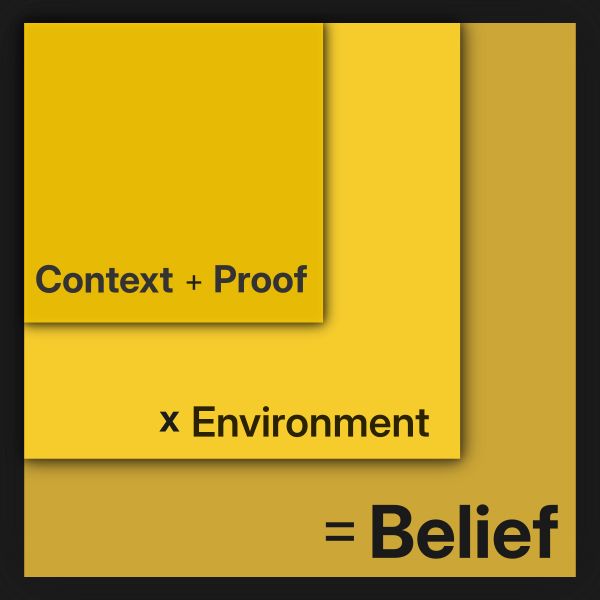
But they haven't seen actual proof, let alone established any belief that the product will work for their specific needs. The buyer has shifted left, but proof hasn't. This is the gap, and it's where deals stall or are quietly lost.
By the time a prospect gets to your demo, they've already formed expectations. If your technical proof doesn't meet them immediately, you're climbing uphill. If your demo environment is cobbled together, or your POC takes weeks to spin up, or your integration showcase doesn't reflect their reality—belief erodes more quickly than you can build it.
The math is simple but brutal: if 80% of the journey happens before sales engagement, but 100% of technical validation happens after, you're perpetually late to the moments that matter most.
What Comes Next
In my next post, I'll explain where belief actually gets created—and why most companies are treating it as a tactical sales activity instead of strategic revenue infrastructure.
Spoiler: it's not in slides. And it's not in your pitch deck.