Marketing is the transfer of enthusiasm. - Jason Fried
If marketing is the transfer of enthusiasm, then presales engineering is the transfer of belief. It is the currency of presales engineers (SEs). Not interest, and not curiosity.
Belief.
SEs move buyers from theory to reality; from evaluating to buying. Belief isn't given, it's earned. And belief must be established before you can win the deal. Think about it: when have you made a significant purchase without belief that the product would work for you?
When belief is created
Here's how I express this, particularly in B2B technical sales:
(Context + Proof) × Environment = Belief
Here's a breakdown.
Proof:
Proof is the technical validation that your solution works. The features, the capabilities, the underlying technology. It's everything your product can do. But proof alone isn't enough.
Context:
Context is the bridge between what your product does and what the buyer actually needs it to do. Context answers: "Does this solve my problem, in my environment, with my constraints?"
So far, so good. When you combine proof with context, you get relevance. And relevance is necessary, but not sufficient for belief.
Environment:
Belief only happens in an environment. An environment is a space where prospects interact with your solution in a way that mirrors their reality. Some examples are demo, lab, POV, or sandbox environments.
Notice the formula uses multiplication, not addition. That's because environment is a multiplier: without it, everything goes to zero. Perfect proof and context mean nothing if the environment is broken, slow, or unrealistic.
Why Things Break Down
The formula can help explain why technical sales break down:
Great proof + wrong context = no belief
Example: A generic demo that showcases features but doesn't address a customer use case.
I vividly recall a meeting that had been set up with a large bank. They were after a specific feature set that we didn't have in the product, but we had "adjacent" features that, in some situations, could stand in for what they needed. The customer liked what they saw feature wise, but the opportunity went nowhere. The context was wrong.
Right context + weak proof = no belief
Example: The vaporware pitch that promises the world but can't demonstrate it.
Many years ago we were taking a security product to market, and we had to pitch it. The pitch far exceeded our ability to prove the actual functionality we were pitching. The belief wasn't there because we couldn't prove anything. Zero belief was the result. Fortunately this was quickly fixed by a killer product team and we ended up doing really well in the market.
Perfect proof + context, but bad environment = no belief
- A POC that takes 6 weeks to stand up, but the data is too small or too weak
- A sandbox that doesn't reflect their integrations
- A demo that requires 47 caveats: "imagine this works faster," "pretend this is integrated"
When any variable in the equation weakens, belief erodes.
The Creators of Belief
At the top of this post, I said that belief was the output of Sales Engineers. In B2B technical sales, they're the ones who:
- Understand the proof (via deep product knowledge)
- Gather and translate the context (discovery, solution design)
- Build and operate the environments (demos, POCs, integrations)
SEs are belief engineers. And environments are their operating system.
Which brings us to a problem.
How Demand Shifted
For years, environments existed primarily at two stages: the demo call and the POV.
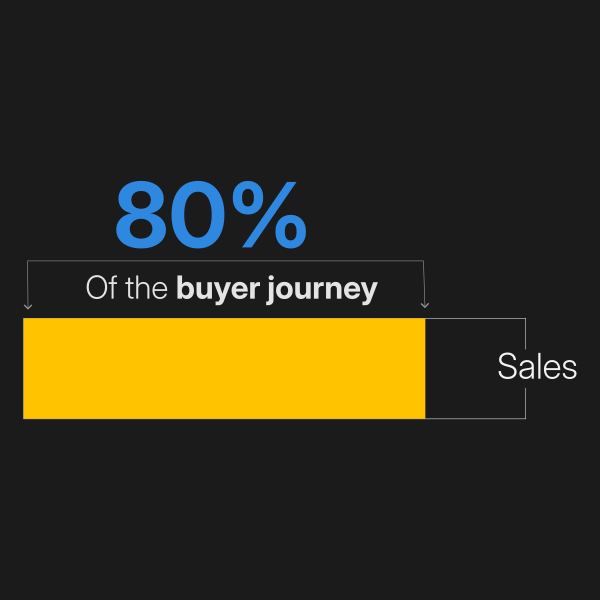
But today, the buyer journey has shifted left. Prospects are 80% through their evaluation before they ever talk to sales.

Belief needs to be created earlier, and in more places along their path.
- Marketing needs environments for technical content and interactive experiences.
- Inbound teams need sandbox environments for self-guided exploration.
- Field teams need live, authentic demos at trade shows and events.
- Partners need enablement environments for co-selling.
- Sales teams need production-like demos, tailored to specific use cases.
These all require environments. And someone has to build them.
Here's the problem: in most organizations, that "someone" is the presales team. And they're being asked to engineer and run these environments on top of everything else they already do.
What Comes Next
If environments are the multiplier in the belief equation, and if SEs are the ones who build and operate them, then why is it so common for these environments to be sprawling and artisanal? Built and managed by the field? Can (or should) SEs build and scale traditional labs to meet the full-funnel demand for belief creation?
In the next article, we'll explore why the answer is almost always no.